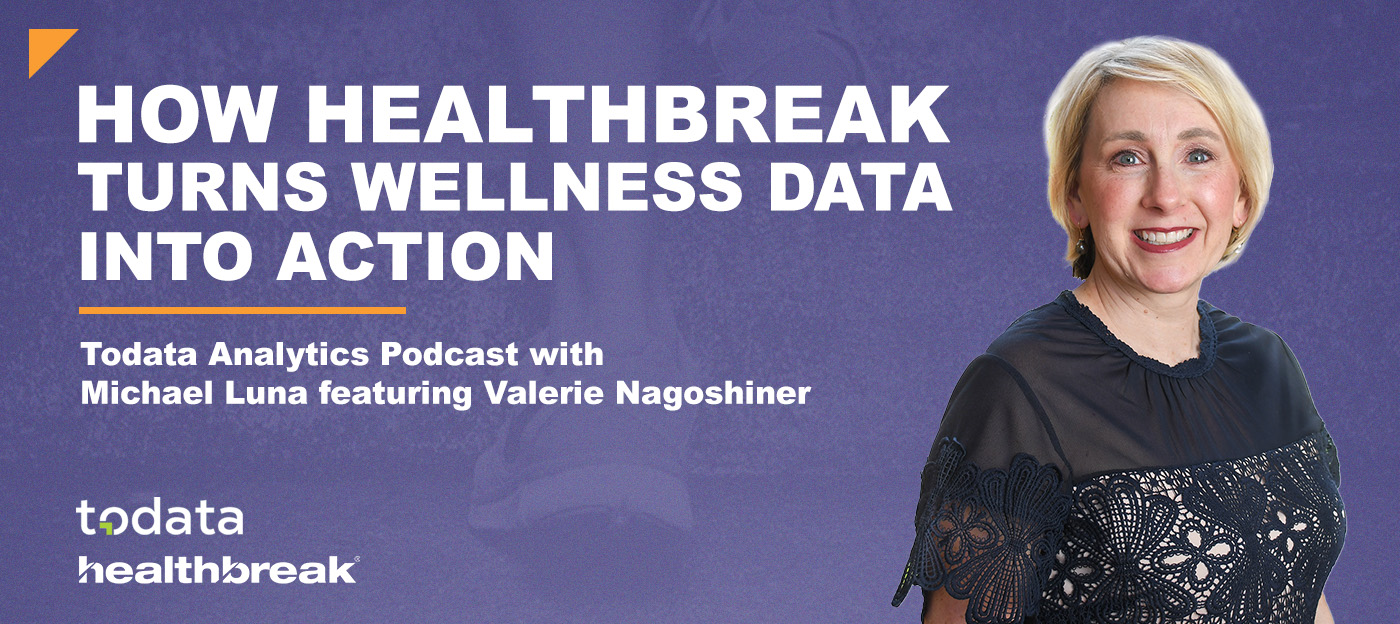

Wellness programs generate an incredible amount of data. The hard part is making that data useful to the business. Healthbreak’s President Valerie Nagoshiner recently joined Michael Luna, Director of Sales at Todata Analytics, for a conversation about how Healthbreak uses real-time data visibility to support employee wellness programs like the State of Colorado’s “State of Health” program. This episode covers participation tracking, incentive programs, privacy-conscious reporting, and how to use data from what’s already happened to improve what happens next. For HR and benefits leaders, the key takeaway from this podcast is: Wellness data should help leaders act, not just report.Listen to the full episode here:
Healthbreak Supports a Large-Scale Wellness Program for the State of Colorado
To understand the data and action challenge, we first have to understand the State of Colorado’s large program. Valerie says, “They created a program called State of Health, which is an evidence-based, best-practice health improvement program. It is a no-cost, year-long program for employees who elect insurance through the state’s plans. The goal is to support employees’ overall health and wellness.”The program gives participating state employees a structured path to improve health through coaching, education, fitness resources, and goal setting. Employees can learn about nutrition, stress management, exercise, sleep, and other areas that affect long-term health.State of Health also includes Fitness Academy, a virtual personal training option. Many employees want to exercise but don’t know where to start, or feel uncomfortable walking into a gym. Fitness Academy provides guided support without asking anyone to become a “gym person” overnight.
Data Needs to Tell a Story for Leadership
The problem is never a lack of data. Valerie explained, “You are often working from siloed individual spreadsheets. There is no integration. It is extremely siloed data with rich information and no way for it to talk to one another.”That is the trap many HR teams know too well. Each vendor may provide useful numbers, but scattered spreadsheets make the full story impossible to see. Raw numbers rarely move a leadership conversation forward. HR teams need a clear story to explain to leadership exactly what is happening, what changed, and what the program needs next.“A simple data point can be interesting, but without integration, there is no story to share; with either the participants you are trying to encourage to join, or the leadership team investing time and money into the program.”
The Shift from Lagging Data to Leading Indicators
Lagging data tells your team what happened after the fact. On the other hand, leading indicators help you make decisions while there’s still time to improve the program. “[Real-time] visibility was a real problem. You end up reacting. You are looking at lagging data, and what we are trying to do is get to leading indicators.”Healthbreak partners with employers and HR teams to look at departments, participant groups, cohorts, or programs and ask better questions. Valerie offers several examples of real-world questions, “Why are we not seeing as much engagement? Are employees signing up but not completing the program? Are we offering classes at the wrong time? Are these not the kinds of classes that speak to this particular group of individuals?”Data and leading indicators can be used to iteratively improve the program, while your team is still participating. The data helps your program grow in the right direction. “The State of Colorado has also been able to recognize opportunities through feedback from coaches. For example, they saw that a fitness component would be valuable, and that was added. It was not originally part of the action plan, but it became an added incentive.”
"“A simple data point can be interesting, but without integration, there is no story to share; with either the participants you are trying to encourage to join, or the leadership team investing time and money into the program.” "
Valerie Nagoshiner
President, Healthbreak
Data Reduces Debate and Speeds Up Decisions
One of the biggest benefits of real-time visibility is practical: teams can stop guessing. “Stakeholders did not have to imagine or debate what they thought might be happening. They could look at the data and say, ‘Okay, we see what is happening.’ It reduces friction and speeds up decision-making.”For HR leaders who need to present results to executives, vendors, brokers, or internal stakeholders, a trusted view makes all the difference.
Tracking Wellness Enrollment, Engagement, and Completion
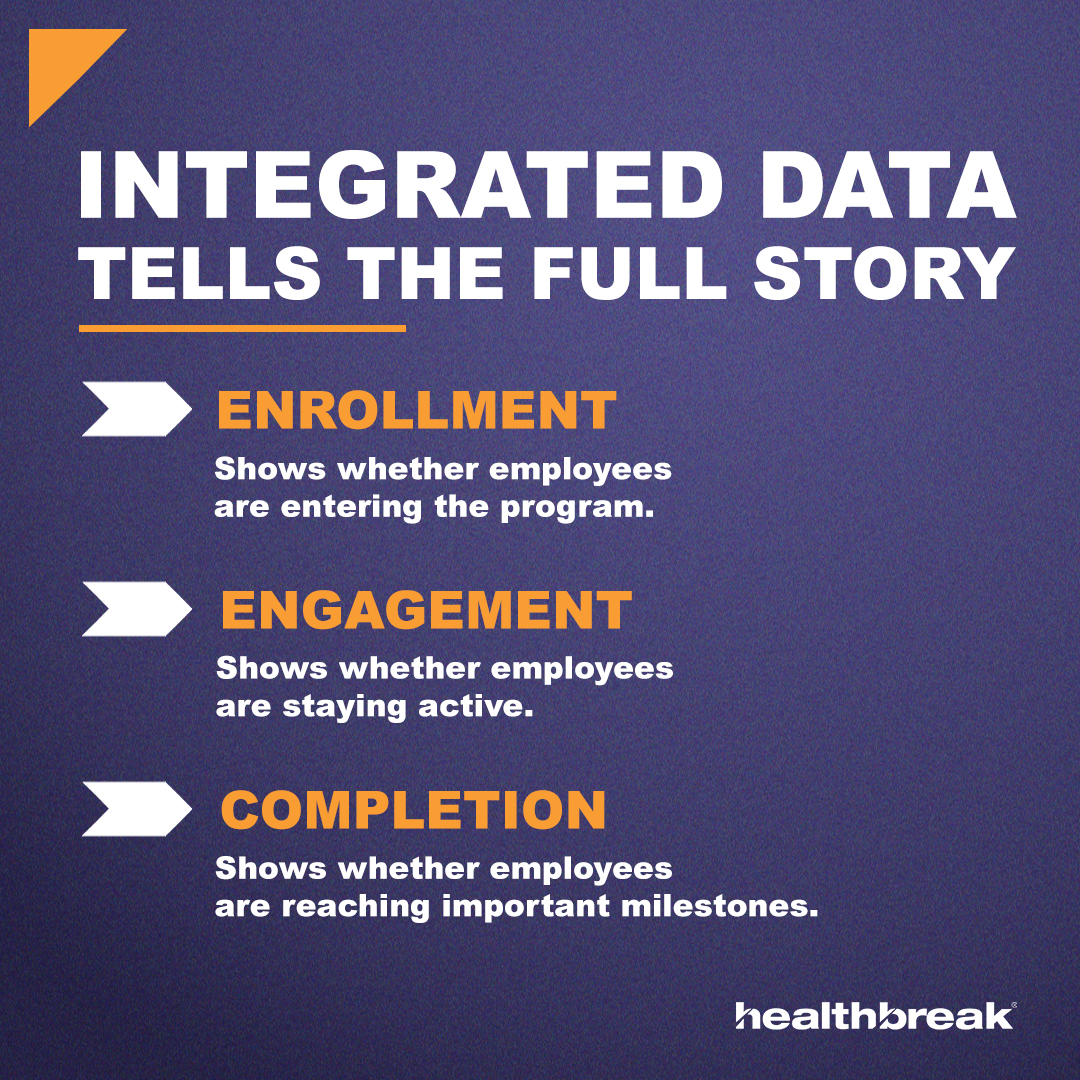
Healthbreak monitors several core metrics across programs:Enrollment shows whether employees are entering the program.
Engagement shows whether employees are staying active.
Completion shows whether employees are reaching important milestones.Healthbreak also reports biometric data and health surveys, to understand impactful changes over time. Healthbreak can show improvement in self-care and condition management over time.“We are constantly looking at ways to continue engagement even after they complete their action plan,” Valerie added. Your wellness program can be more than a one-time checkbox, but actually prove repeat engagement and individual improvements in year 2, 3, 4, and more.
Wellness Data Supports Recruitment, Retention, and Culture
Wellness data helps employers talk about the broader value of their organization. “The reason for having this data is not just participation… Clearly, employers want people to participate, and they are spending real dollars on this. But they also want to understand, what results are being produced? What does the evidence show?”“When you have a workforce engaged in wellness, you see a healthier and more positive workforce. It becomes a tool for recruitment and retention. You see lower absenteeism.”The broader business case for a wellness program? The data proves not just lifestyle improvements, but measurable improvements in productivity, retention, employee fulfillment & happiness, recruitment, and culture
Participation Tracking While Respecting Employee Privacy
Tracking participation, especially considering privacy concerns, is more complicated than it looks. Statewide programs often involve multiple vendors, different participation pathways, incentive requirements, privacy considerations, and reporting needs. Healthbreak tracks participation and completion while protecting employee privacy. Valerie made that point directly: “I do not know individual employees or their personal information. That privacy is very important. We have the right privacy protections in place and use deidentified information.”
What Employers Should Take Away
The biggest takeaway is simple: wellness data should lead to action.A good reporting system should help employers answer:
- Who is enrolling?
- Who is completing?
- Who is staying engaged?
- Which groups need more support?
- Which topics are gaining or losing interest?
- Which program changes should happen next?
When leaders can answer those questions, wellness becomes easier to manage and easier to defend.When leaders cannot answer those questions, wellness becomes another program with unclear impact, and a mystery line item in the benefits budget.
Listen to the Full Conversation about Wellness Programs and Data Insights
The full episode is especially relevant for public-sector employers, HR teams, benefits leaders, and organizations running wellness programs across multiple vendors or employee groups.Listen to the full episode here. Healthbreak has been the national leader at helping employers integrate & run impactful wellness programs and on-site fitness centers for healthier, more productive workforces since 1990. If you’re starting this conversation within your team, we’re happy to be a thought partner and share our experience from serving over 280,000 employees.