The employees quietly driving your future healthcare costs aren’t the ones you think.
- Pre-diabetic or managing early-stage risk factors like elevated blood pressure or cholesterol
- Gradually gaining weight or developing poor nutrition habits
- Sedentary, but not enough to trigger any real concern
- Quietly showing signs of increasing stress and burnout
They look fine on the surface. They’re showing up, doing their jobs, and nobody is flagging them in your health data. But underneath that, risk is building slowly, and that’s exactly what makes this group so easy to overlook.
Why the middle matters more than the extremes
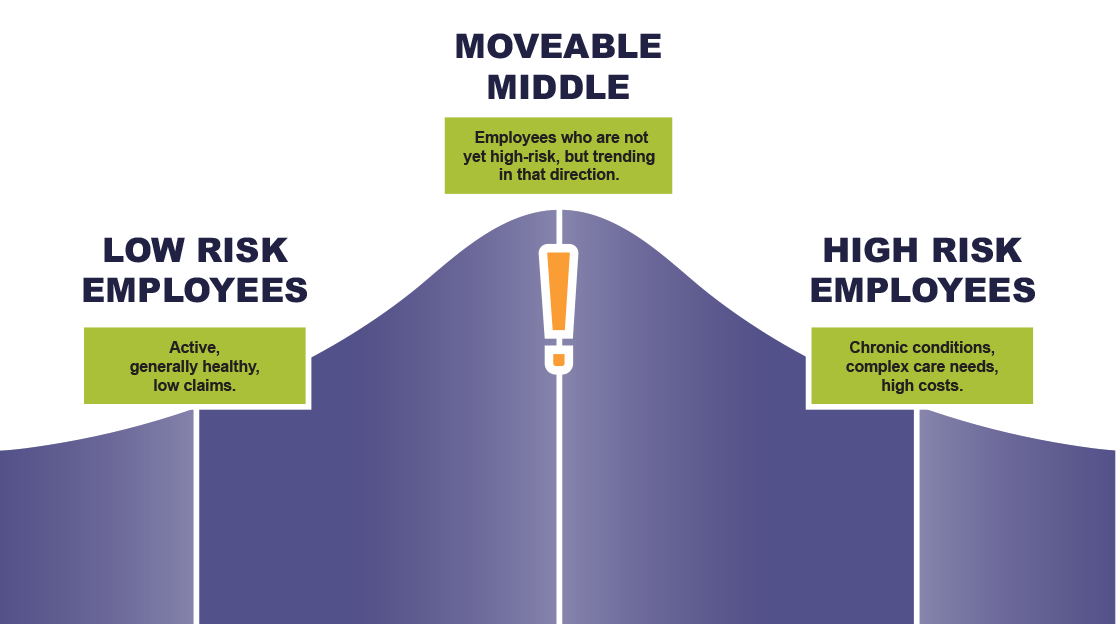
Low-risk employees are already doing well, and you can absolutely support them, but they aren’t where major cost reduction happens. High-risk employees matter too, but moving the needle there tends to be slow and resource-intensive work. The middle is genuinely where the magic happens, because small and consistent behavior changes can prevent major health events before they ever occur. A single avoided chronic condition can mean tens or hundreds of thousands of dollars in avoided claims, and when you multiply that across a population, the math starts to get really interesting.
Why most wellness programs miss this group
- Cater to high performers with step challenges and broad participation campaigns
- Focus heavily on high-risk individuals with clinical interventions
What actually moves the middle
- Coaching that feels personal, not like a corporate checkbox
- Content that meets employees where they actually are, not where a program thinks they should be
- Flexibility that fits into real life and real schedules
- Incentives tied to meaningful progress, not just participation
- Resources that speak to what actually matters to them, whether that’s parenting, mental health, or managing menopause
Why this matters to leadership
What HR teams should do next
- Do we actually know where our middle group is?
- Are we doing anything meaningful to engage them?